Why Maps Are Non-Negotiable in UPSC
Every UPSC aspirant knows the feeling — flipping through an atlas at midnight, trying to memorize river tributaries, mountain passes, and international borders before the Prelims. Geography isn't just one topic in UPSC. It bleeds into every paper.
Physical geography. Economic geography. Environment. Disaster management. Current affairs tied to specific regions. All of it needs maps.
And yet, most students study maps the old way — static images in textbooks, printed atlases, hand-drawn sketches. That method doesn't scale in 2025.
Introducing SelfStudy's Maps Feature
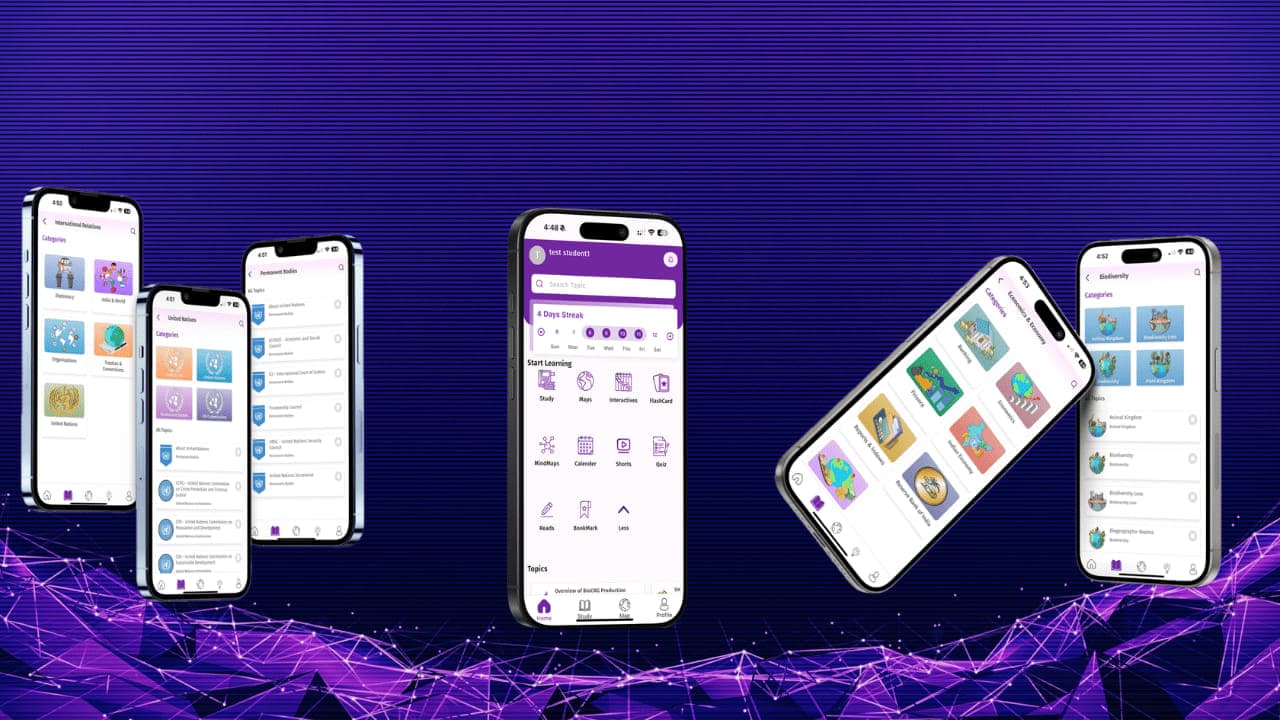
The SelfStudy UPSC IAS Prep App includes a dedicated, interactive Maps module built specifically for UPSC aspirants. It's not a Google Maps clone. It's a curated, exam-intelligence-driven map tool that knows exactly what UPSC asks — and trains you on exactly that.
🗺️ What's Inside the Maps Module
1. Topic-Wise Map Layers
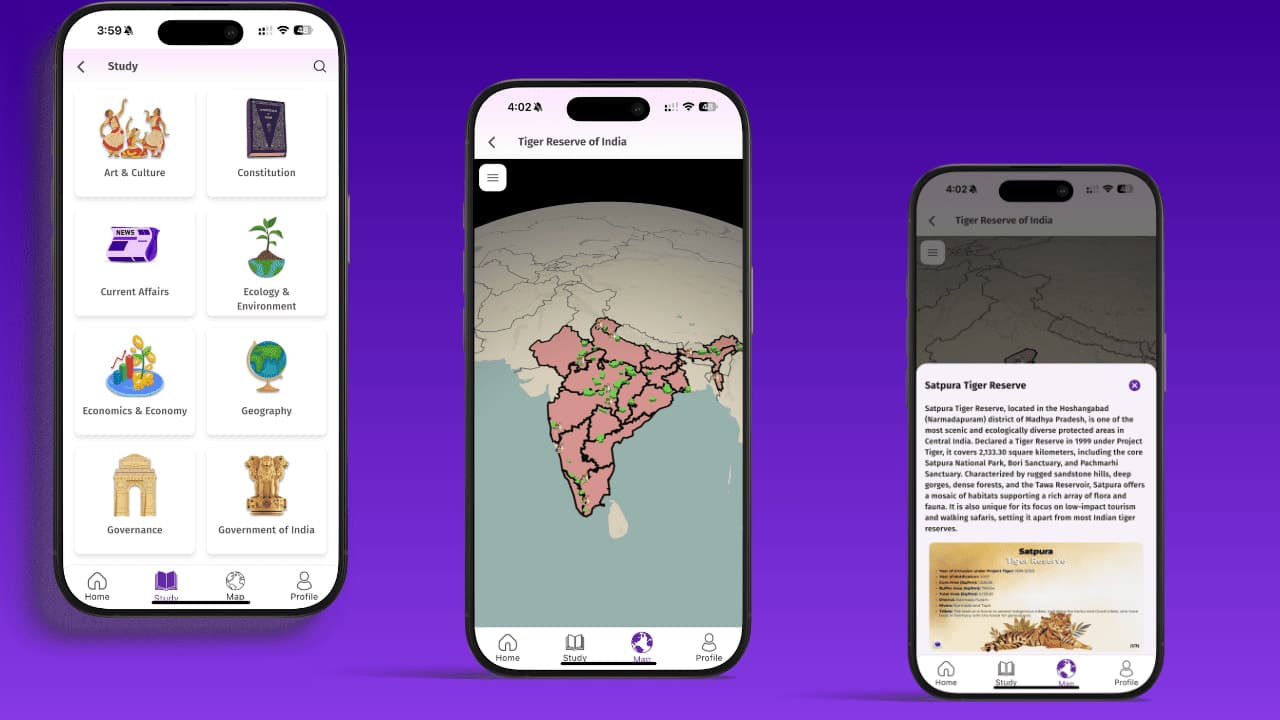
Switch between thematic layers — river systems, mountain ranges, national parks, coal fields, ports, tribal regions, biosphere reserves, and more. Each layer is UPSC-relevant and curated from previous year question trends.
2. Clickable Hotspots with Exam Notes
Every important location is a clickable point. Tap on the Palk Strait, and you don't just see its location — you see a quick exam note: "Separates India from Sri Lanka. Frequently asked in context of maritime disputes and Sethusamudram project."
This is maps meeting smart notes.
3. Previous Year Questions Mapped Geographically
PYQs are pinned directly onto the map. When you look at the Northeast, you see not just geography — but the actual questions UPSC asked about that region in 2019, 2021, 2023. Context. Pattern. Confidence.
4. Blank Map Practice Mode
The real game-changer. A blank India map where you identify and pin locations yourself. The app evaluates your answer and shows the correct location with an explanation. This active recall method is proven to improve retention far better than passive reading.
5. Current Affairs Map Updates
Border disputes, new national parks, infrastructure corridors, disaster-affected regions — the Maps module is updated in sync with monthly current affairs. So your geography prep stays relevant and current.
How Toppers Use the Maps Feature
During Topic Study: After reading about the Western Ghats in Environment, open the map layer for biodiversity hotspots. See exactly which districts, states, and sanctuaries fall under it.
During Revision: Use the Blank Map mode for 15 minutes every day. It's the fastest way to test yourself on locations without needing a study partner.
Before Prelims: Go through the PYQ map pins for the past 5 years. You'll immediately see the geographic focus areas UPSC returns to repeatedly — Northeast, Himalayas, coastal regions, river basins.
For Mains Answer Writing: Use the contextual exam notes to add location-based specifics to your answers. Examiners notice when you write "the Brahmaputra basin, particularly in Assam's Majuli island region" instead of just "Northeast India."
Coverage — What the Maps Module Includes
| Category | Topics Covered |
|---|---|
| Physical Geography | River systems, mountain passes, plateaus, ghats, deltas |
| Political Geography | State boundaries, districts, union territories, capitals |
| Economic Geography | Coalfields, oilfields, ports, industrial corridors, SEZs |
| Environment | National parks, wildlife sanctuaries, biosphere reserves, Ramsar sites |
| Disaster Geography | Earthquake zones, cyclone-prone coasts, flood plains |
| International | Neighbouring countries, straits, sea routes, disputed borders |
Why This Approach Works
The UPSC exam doesn't test whether you've seen a map. It tests whether you understand geographic relationships. Why is a port important? What makes a river a flood risk? Why does a region have a specific tribal concentration?
SelfStudy's Maps feature doesn't just show you where things are. It tells you why they matter for the exam — every single time.
Get Started Today
The Maps feature is available on the SelfStudy UPSC IAS Prep App — free to explore, with premium layers for serious aspirants.
📲 Download SelfStudy: self-study.in | Available on Android & iOS
Cracking UPSC is about studying smarter, not just harder. Your map prep starts here.